

Sarah Ferrara, doctorante à l’Université de Reims Champagne Ardenne, co-encadrée par Christelle Declercq (PU, C2S, Université de Reims Champagne Ardenne) et Marc Aguert (MC, LPCN, Université de Caen Normandie), soutiendra sa thèse de doctorat en Psychologie et ergonomie, intitulée : « Vers une conception dimensionnelle de la compréhension du langage chez l’enfant : le cas du langage figuré » le 6 novembre 2025 à l’Université de Reims Champagne-Ardenne (URCA).
Sarah Ferrara (doctorante, C2S, Université de Reims Champagne Ardenne), Marc Aguert (MC, LPCN, Université de Caen Normandie) et Christelle Declercq (PU, C2S, Université de Reims Champagne Ardenne) ont publié un nouvel article dans la revue Journal of Cultural Cognitive Science.
Ferrara, S., Aguert, M., & Declercq, C. (2025). When children’s language comprehension is good-enough. Journal of Cultural Cognitive Science, 1-11. https://doi.org/10.1007/s41809-025-00183-9
Abstract
Children’s language understanding has been studied as resulting in a dichotomy, with children either fully capturing meaning or failing to capture it entirely. However, it does not seem to reflect in daily interactions. This study examined children’s good-enough comprehension, this level of comprehension being defined as the formation of an imprecise and shallow yet mostly satisfying representation of the meaning of an utterance, used in communicative settings. Ten-year-old children were presented a test created for this study, in which they had to answer falsified questions under two conditions (speed answering vs precise answering). Mixed model analyses showed that children displayed good-enough comprehension by not noticing the falsification in the speed condition. Further analyses also showed that the time children took to answer falsified questions was significantly longer than non-falsified questions, even when the falsification went unnoticed. The consideration of good-enough comprehension in children dictates a reevaluation of existing literature on children’s comprehension, as good-enough comprehension may precede good comprehension during development.
Il est consultable via ce lien : https://doi.org/10.1007/s41809-025-00183-9. Celui-ci a été publié dans la revue Journal of Cultural Cognitive Science (IF : 1.5) une revue qui couvre les principaux domaines de recherche en sciences cognitives, notamment la psychologie, les neurosciences cognitives, la linguistique, l’anthropologie, etc.
Ils ont tous les trois préparé un second article qui sortira au mois de novembre dans la revue Language Development Research, et qui est d’ores et déjà accessible :
Ferrara, S., Aguert, M., & Declercq, C. (2025). Not early, not late, but developing: Children’s “good-enough” understanding of metaphors. Language Development Research, 5(2), 67-92. https://doi.org/10.34842/ldr2025-806
Abstract
To date, the debate over the age at which children begin to understand metaphors remains unresolved. Do children begin to acquire comprehension early, around age 3 to 4, or later, around age 8? One way to answer this question is to use the notion of « good-enough » comprehension proposed by Ferreira et al. (2002) and to hypothesize that young children understand metaphors in a “good enough” manner while older children understand them in a more precise and accurate manner. This hypothesis was tested using a task where children were asked to assess the extent to which more or less precise and relevant rephrasings resembled nominal metaphors. We therefore sought to (1) differentiate between « good-enough » and « good » (precise and accurate) understanding in school-age children and (2) show that the former appears earlier than the latter during development. Data collected from 300 children aged 5 to 11 suggest that both goals were reached. These results suggest that, while metaphorical abilities emerge early, comprehension processes then evolve during childhood, with a refinement of understanding between 7 and 9 years old. These results may open a path to reconcile the proponents of early acquisition with those of later acquisition.
Il est déjà consultable via ce lien : https://doi.org/10.34842/ldr2025-806 . Il a été publié dans la revue Language Development Research une revue en open-access qui publie des études empiriques et théoriques sur le développement du langage chez l’enfant : typique et atypique, monolingue, bilingue et multilingue, parlé, signé ou écrit.
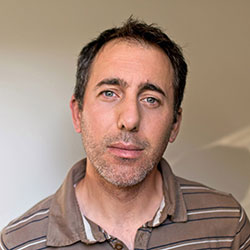
Marc Aguert est enseignant-chercheur au LPCN. Il s’intéresse à l’étude du développement de la cognition sociale de la période pré-linguistique à l’adolescence, à la manière dont certains indices paralinguistiques (prosodie, expressions faciales) concourent à se représenter les intentions communicatives d’autrui.